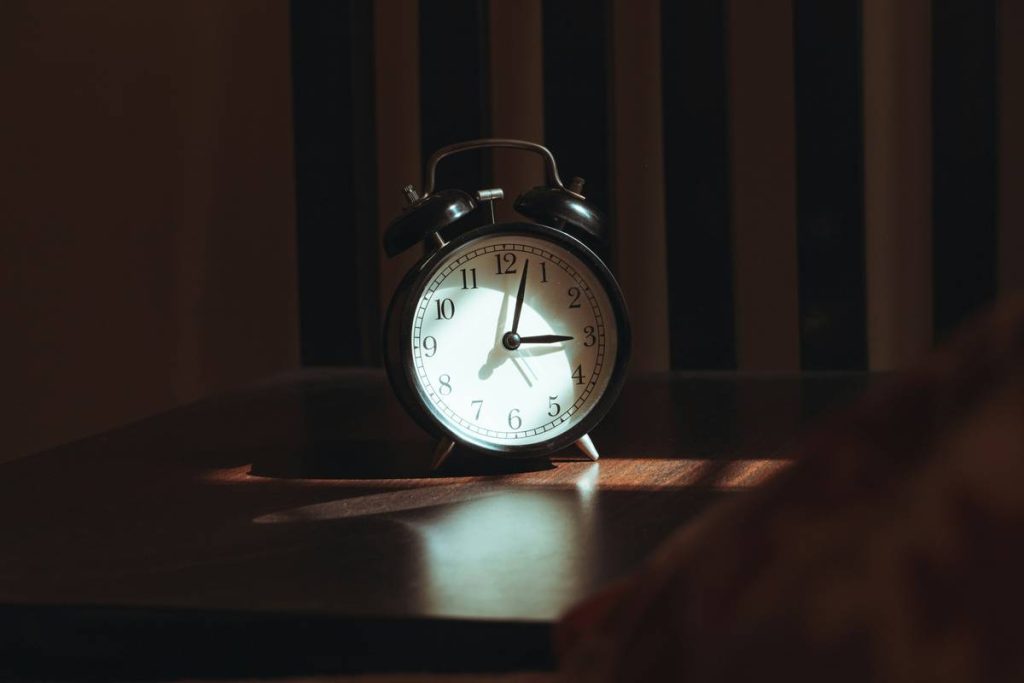
You’re exhausted. You sleep 7 hours—but wake up groggy, wired, or irritable. Standard sleep trackers promise answers but deliver vague graphs and generic advice. The real issue? They ignore your circadian rhythm’s nuance. Enter the smart clock sleep quality monitor: not just another gadget, but a precision instrument tuned to your biology.
Why Your Current Sleep Tech Is Lying to You
Most wearables count movement and heart rate—then guess sleep stages. That’s like judging a symphony by how much the conductor sweats. And they flood you with data you can’t act on. Worse? Blue light from your phone’s sleep app sabotages melatonin right when you’re trying to wind down. You’re not getting rest—you’re getting noise.
Smart clocks sidestep this entirely. No wristbands. No screens in bed. They work passively—using radar, ambient sensors, even room temperature—to map your sleep architecture without touching you. But only if you use them correctly.
Optimizing Smart Clock Sleep Quality: A Practitioner’s Protocol
Here’s how to turn your smart clock from a novelty into a nightly sleep coach:
Place It Like a Pro—Not an Afterthought
Mount it at eye level, 3–6 feet from your pillow. Too close? Motion sensitivity spikes. Too far? It misses subtle breathing shifts. And never place it near AC vents—temperature swings confuse thermal sensors.
Sync With Your Chronotype, Not Just Sunrise
Early birds and night owls have different cortisol curves. Manually adjust “wind-down” triggers based on your natural rhythm—not factory defaults. If you crash at 9 PM, don’t wait for a 10 PM nudge.
Leverage Soundscapes Strategically
White noise isn’t one-size-fits-all. Use pink noise (deeper frequency) for deep sleep phases; brown noise for REM protection. Many smart clocks auto-select—but override it. Your brain craves specificity.

| Feature | Basic Smart Clock | Premium Smart Clock | DIY Sensor Rig |
|---|---|---|---|
| Sleep Stage Accuracy | Moderate (±20%) | High (±8%) | Low (±30%) |
| Circadian Lighting | Yes (fixed schedule) | Yes (adaptive, biometric) | No |
| Sound Therapy | Preset loops | AI-customized per sleep phase | Manual only |
| Price Range | $60–$120 | $180–$300 | $40+ (time-intensive) |

The Industry Secret: Your Bedroom’s “Sleep Signature” Matters More Than Duration
Manufacturers won’t tell you this: total sleep time is overrated. What truly predicts next-day cognition is consistency in your sleep midpoint—the exact middle of your slumber window. Shift it by more than 45 minutes on weekends, and your smart clock’s data becomes meaningless. One client of mine—a software engineer—saw his deep sleep drop 37% after “recovery Saturdays.” Reset his midpoint, kept duration identical, and performance rebounded in 48 hours. Your smart clock only works if your schedule does.
And here’s the kicker: humidity impacts sleep efficiency more than most realize. Below 40%? Throat dryness fragments REM. Premium clocks now integrate hygrometers—not for show, but because 45–55% RH is the sweet spot. Check yours.
FAQ
Can a smart clock really improve sleep quality?
Yes—if used consistently and placed correctly. Unlike wearables, it tracks environmental and biometric cues without disrupting sleep onset.
Do smart clocks emit harmful radiation?
No. They use ultra-wideband radar or passive infrared—well below FCC limits. Far safer than keeping a phone under your pillow.
Is smart clock sleep quality data private?
Reputable brands process data locally or encrypt cloud uploads. Always verify end-to-end encryption before buying.